
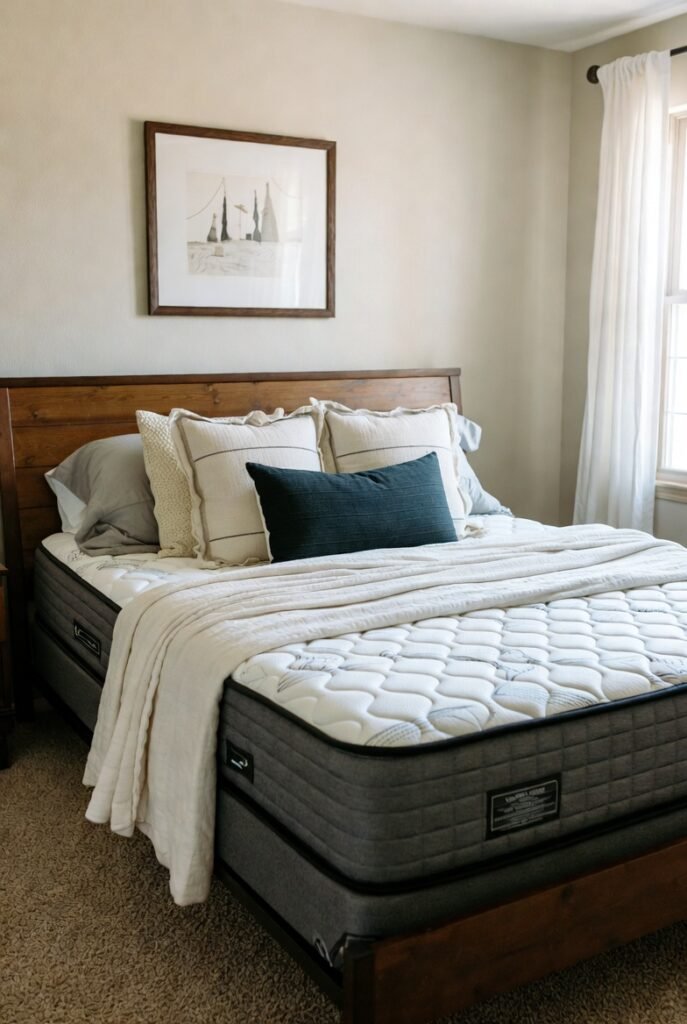
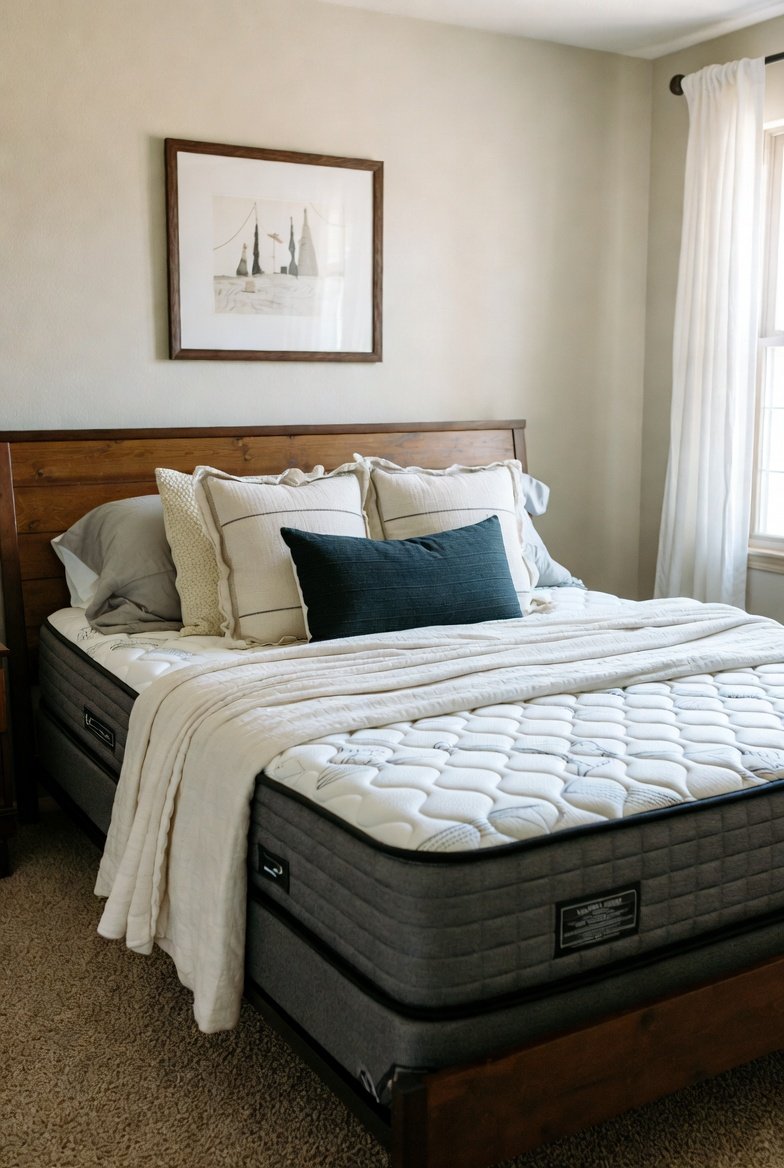
Best Premium Mattress
Most people don’t overpay for a mattress because they’re careless.
They overpay because “premium” is vague enough to feel safe.
A showroom label, a thicker profile, a cooling fabric, a luxury-sounding foam — these things sound like upgrades. But premium sleep is rarely about how impressive a mattress looks or how dramatic it feels for five minutes.
Premium sleep is about what happens on a normal Tuesday night, six months after you stop thinking about the purchase.
If the mattress stays composed, pressure stays even, and support stays predictable — that’s premium. If the mattress chases sensations, relies on softness to impress, or shifts in feel night to night — that’s marketing dressed as comfort.
This buying guide defines what “premium” actually means, where the refinement is real, and how to stop spending once improvements become preference instead of progress.
The 5 Ways People Accidentally Overpay for “Premium”
If you remember nothing else, remember these. They’re the most common premium traps.
1) Confusing Thickness With Quality
Premium mattresses are often thicker — but thickness is not the upgrade. Stability is the upgrade. A thick mattress with unstable comfort layers can feel amazing early and drift quickly.
2) Paying for a “Wow” Moment Instead of Sleep
Showroom “wow” is usually softness, deep sink, or dramatic contouring. Premium sleep is the opposite: it disappears once you fall asleep.
3) Believing “Premium” Guarantees Durability
Premium increases durability when materials and support design justify it. The word itself guarantees nothing.
4) Overvaluing Cooling Marketing
Many “cooling” features feel cold for 30 seconds and then behave like normal fabric. Premium temperature control is usually about balanced airflow and materials that don’t trap heat.
5) Thinking Luxury and Premium Are the Same
They aren’t. Luxury often prioritizes appearance, storytelling, or niche materials. Premium prioritizes consistent nightly outcomes.
What Premium Sleep Actually Feels Like
Premium is not a dramatic feeling. It’s a controlled one.
A truly premium mattress tends to feel:
- steady (support doesn’t drift under you)
- smooth (pressure relief isn’t spiky or uneven)
- predictable (night-to-night feel doesn’t fluctuate)
- quiet (movement doesn’t create a “surface reaction”)
The biggest tell is subtle:
You reposition less.
Not because the mattress is softer — but because pressure and alignment stay stable enough that your body doesn’t keep negotiating with the surface.
Premium vs Luxury: A Clean Boundary
People use “premium” and “luxury” like they’re interchangeable.
They’re not.
Luxury tends to emphasize:
- aesthetics and finish
- craftsmanship cues
- brand storytelling
- indulgent sensory feel
Premium prioritizes:
- sleep stability
- pressure consistency
- alignment predictability
- refined material behavior over time
A mattress can look luxurious and still sleep poorly.
A premium mattress often looks unremarkable — and sleeps quietly better.
The Premium Upgrade Ladder (What Changes First)
Premium improvement happens in a specific order.
If you understand this sequence, you stop overpaying.
Upgrade #1: Composure
The mattress stops feeling reactive. It responds, but doesn’t “fight back” or collapse.
Upgrade #2: Pressure Evenness
Hips and shoulders stop taking turns being uncomfortable. Relief becomes smoother, not deeper.
Upgrade #3: Motion Stability
Couples notice this fast. Movement becomes quieter. Sleep becomes less fragmented.
Upgrade #4: Predictable Aging
A premium mattress doesn’t avoid softening — it softens evenly and slowly.
Beyond this point, upgrades often become preference-driven rather than universally felt.
That’s the moment “premium” ends and “luxury choice” begins.

Premium Materials: What Actually Justifies the Label
Premium mattresses aren’t defined by exotic materials. They’re defined by materials chosen for behavior.
Premium systems usually have:
- comfort layers that don’t rely on extreme softness to feel good
- support cores that maintain alignment without harshness
- materials that recover shape consistently after compression
The pattern you want is simple:
controlled comfort + stable support + slow, even wear
Not novelty.
Not marketing.
Not a long list of features.
Firmness in Premium Builds: Why Extremes Fail More Often
Premium mattresses rarely live at the extremes.
Ultra-soft profiles require more material to hold structure — and even then, they can drift faster under regular use. Ultra-firm profiles can preserve support but sacrifice pressure comfort.
Most premium beds cluster around medium to medium-firm because it’s where:
- comfort improves without losing alignment
- materials aren’t overworked
- wear tends to stay even
Quick mapping:
- Back sleepers: medium-firm
- Side sleepers: medium
- Stomach sleepers: firm (or medium-firm at most)
If a “premium” mattress is extremely plush, the buyer should treat durability as a trade, not a promise.
Motion Control: The Premium Feature You Feel Every Week
Premium sleep shows up most clearly in what you don’t notice.
For couples and light sleepers, the biggest premium upgrade is often:
- fewer micro-wakeups
- less ripple transfer
- less surface “bounce reaction”
You don’t wake up thinking “motion isolation.”
You wake up thinking you slept deeper.
That’s premium.
Cooling at the Premium Level: What’s Real vs Decorative
Premium cooling is usually thermal neutrality, not an icy surface.
Real premium cooling tends to come from:
- airflow through structure (especially in hybrids)
- foams that don’t trap warmth aggressively
- covers that breathe instead of sealing heat in
What is often decorative:
- vague “cooling gel” claims with no structural airflow
- thick plush tops that trap heat regardless of fabric
- “cool to the touch” covers that fade after minutes
If you sleep hot, prioritize structure and breathability over claims.
Premium cooling is more physics than marketing.
Longevity: How Premium Mattresses Age Differently
Premium mattresses justify themselves over time.
Not by never changing — but by changing predictably.
A true premium mattress tends to:
- maintain feel longer
- soften gradually, not suddenly
- avoid deep, uneven impressions early
You’re paying for controlled wear.
That’s why premium sleep often feels “calmer.”
Your body stops adjusting to a surface that keeps changing.
Premium Red-Flag Scanner (Quick Checklist)
Use this to avoid paying premium money for non-premium design.
Green Flags
- feels composed, not dramatic
- support feels even across the surface
- pressure relief is smooth (not sinky)
- movement doesn’t create surface instability
- comfort feels “settled” after you move
Red Flags
- “wow-soft” feel without clear support underneath
- thick plush top that feels puffy or airy
- heavy reliance on cooling buzzwords
- feels great for 5 minutes but unstable when you shift
- edges collapse easily (common sign of underbuilt structure)
If you hit multiple red flags, it may still be a good mattress — but it’s not premium in the way most buyers mean.
The Premium Stop Signal (The Moment Smart Buyers Stop Spending)
If you’re reading premium guides and thinking:
“Should I go one level higher?”
Pause.
Above the premium tier, additional spending typically buys:
- preference
- aesthetics
- niche materials
- craftsmanship stories
- sensory differences only some sleepers perceive
Those are valid reasons to spend more.
But they are not guaranteed sleep improvements.
When gains become subtle rather than obvious, you’ve crossed from refinement into indulgence.
Premium decisions end cleanly.
Past this point, you’re choosing luxury style — not whether you’ll sleep better.
Who a Premium Mattress Is Best For
Premium makes the most sense if you:
- notice small differences in comfort and motion
- want sleep stability over novelty
- are sensitive to pressure points
- plan to keep the mattress for years
- want refinement without luxury inflation
This is the sweet spot for buyers who want the mattress to disappear once they fall asleep.
When Premium May Not Be Necessary
You may not need premium if:
- you prefer extreme firmness or plushness
- you upgrade frequently
- budget matters more than refinement
- aesthetics matter more than sleep behavior
- Best value mattress
Premium is not a moral upgrade.
It’s a stability upgrade.
If you don’t value stability, you don’t need to pay for it.
How to Choose Premium Without Overthinking
A premium decision doesn’t require perfection.
Ask three questions:
- Does it feel composed rather than dramatic?
- Does it support without pushing back?
- Does it feel stable when you shift positions?
If yes, you’re likely already in premium territory — regardless of what the brand calls it.
Bottom Line
The best premium mattress isn’t about indulgence.
It’s about composure.
Premium sleep is what happens when comfort, support, and materials behave predictably night after night — without exaggeration, without instability, and without forcing you to “adapt” to the mattress.
If you want luxury sleep that actually shows up every night, choose a mattress that feels balanced, controlled, and designed to age gracefully.
That’s premium.