
Best Mattress Under $2000
A $2,000 mattress budget is rarely accidental.
Buyers who arrive here typically aren’t searching for the cheapest option — they’re searching for the last mattress they’ll need to think about for a long time.
This is the edge of near-luxury, where meaningful engineering gains still exist but where the relationship between price and sleep improvement begins to narrow.
Spend wisely, and comfort becomes quietly consistent for years.
Spend emotionally, and you risk paying for narrative rather than performance.
This buying guide exists for late-stage buyers who want exceptional sleep quality — without drifting into unnecessary indulgence.
No lifestyle branding.
No prestige framing.
No affiliate theatrics.
Just a structural explanation of what truly improves at $2,000 — and where genuine luxury still lies beyond reach.
Quick Decision Framework — Is $2,000 Your Rational Stopping Point?
Before evaluating materials, answer the question most high-budget shoppers wrestle with privately:
Is this where I stop… or where I start justifying more?
Stop confidently at $2,000 if:
- You want near-luxury durability without luxury inflation
- You expect roughly 12+ years of usable life
- Balanced support matters more than ultra-plush indulgence
- You prefer engineered performance over specialty narratives
Consider moving higher if:
- Natural materials are a priority
- Zoned ergonomic precision matters
- You want hotel-level plushness that lasts
- Edge rigidity is essential
- You simply value craftsmanship
The smartest buyers don’t chase price ceilings.
They stop when engineering stops improving proportionally.
What $2,000 Actually Upgrades — Structural Reality
The move from $1,500 is not dramatic visually.
Technically, however, it marks the beginning of mattresses built to endure sustained mechanical load over many years.
Component | Under $1,500 | Under $2,000 |
Memory foam density | 5+ PCF | 5–6+ PCF possible |
Coil count (Queen) | 1,000–1,400 | 1,200–1,800 |
Edge reinforcement | Improved | Often robust |
Comfort architecture | Multi-layer | Advanced layering |
Support cores | Durable | Higher compression resistance |
Expected lifespan | 10–12 yrs | 12–15 yrs possible |
These upgrades rarely announce themselves on night one.
But five years later — when the mattress still supports rather than sags — their value becomes unmistakable.
Durability is not a showroom sensation.
It is a long-term mattress experience.
Why This Tier Feels Different Immediately
For many sleepers, this is the first price range where a mattress stops demanding adaptation.
Instead…
the mattress adapts to you.
Pressure distributes more evenly. Motion fades faster. Support stabilizes across positions. Night-to-night comfort becomes predictable.
This is where mattresses stop behaving like consumer purchases…
…and begin behaving like durable household equipment.
Yet importantly — this remains the upper boundary of value-driven buying.
Beyond it, improvements grow narrower and more personal.
Which is why many experienced buyers plant their flag right here.
Where Premium Engineering Actually Begins
This is the threshold where manufacturers can no longer rely on marketing alone.
Engineering becomes harder to fake.
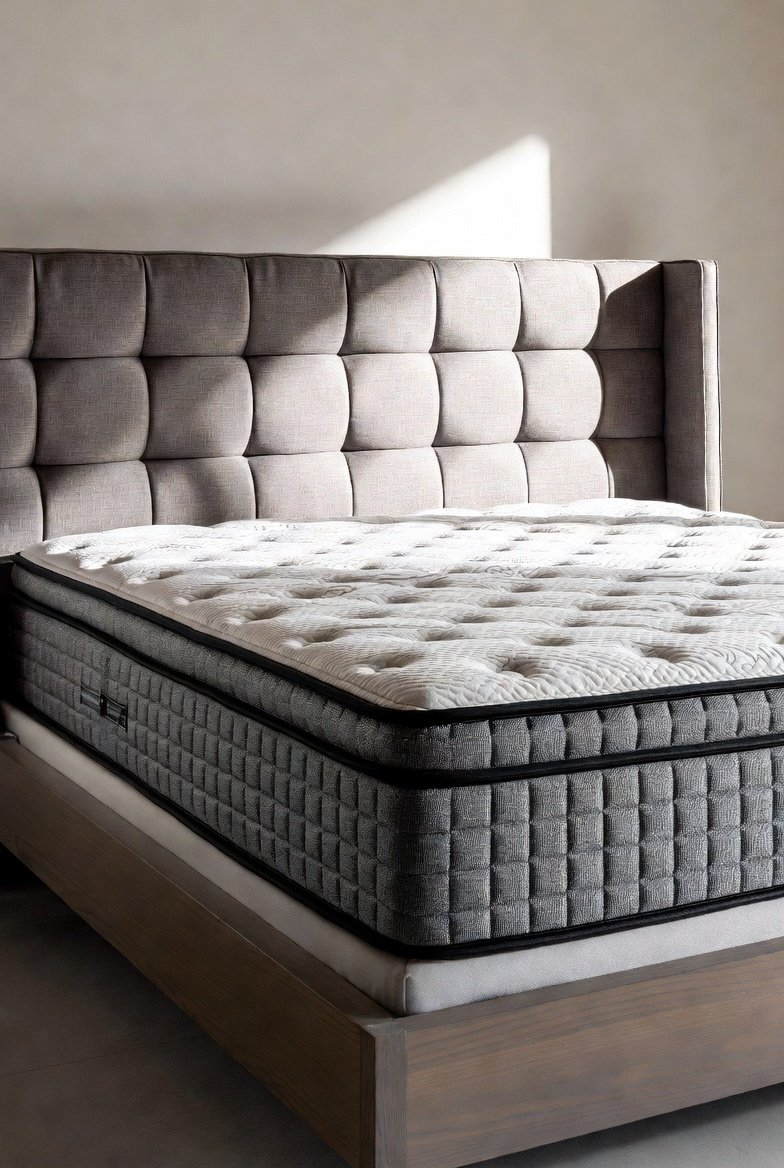
You may begin seeing Premium mattress:
Latex Hybrid Integration
Not always full latex builds — but meaningful comfort layers that improve resilience and temperature neutrality.
Microcoil Comfort Layers
Thousands of miniature coils designed to enhance pressure distribution while improving airflow.
Zoned Coil Geometry
Targeted reinforcement beneath heavier body regions for improved spinal alignment.
High-Resilience Polyfoam
More elastic support materials that recover shape faster after compression.
Occasional Hand-Tufting
A construction method that physically anchors layers together, reducing long-term shifting.
None of these features guarantee perfection.
But collectively, they signal that engineering — not storytelling — is driving the design.
And that distinction matters enormously over time.
The Reliability Principle — Why Restraint Still Wins at High Budgets
Ironically, some of the longest-lasting mattresses near $2,000 avoid excessive complexity.
When overwhelmed by options, the safer choice often favors:
- transparent material specifications
- disciplined layering
- balanced firmness
- proven construction methods
Complexity can impress in a showroom.
Engineering survives a decade.
Reliability rarely commands attention — until it quietly outperforms flashier designs.
Materials That Truly Earn the Price
Material execution becomes unmistakably better here.
Advanced Memory Foam Systems
Higher densities allow deeper contouring without structural instability.
Instead of feeling engulfing, foam becomes adaptive — distributing load while maintaining alignment.
Premium Hybrid Architectures
Often the strongest performers overall.
Improved coil geometry combined with resilient comfort layers produces a balance between responsiveness and pressure relief that lower tiers struggle to achieve.
At this level:
Foam feels composed.
Hybrids foam feel deliberate.
Thickness Finally Mirrors Engineering
Below $1,500, height can sometimes exaggerate capability.
Here, it usually reflects legitimate structural layering.
The sweet spot often falls between 13 and 15 inches, where deeper comfort systems coexist with robust support.
Still — skepticism remains healthy.
Height should reinforce durability.
Never camouflage softness.
Firmness Freedom — Without Immediate Consequence
Choice expands meaningfully.
Side sleepers can access deeper cushioning without rapid collapse. Combination sleepers benefit from faster surface recovery. Even softer profiles become viable — when anchored by strong support systems.
Guidance remains timeless:
- Back sleepers → medium-firm
- Side sleepers → medium to medium-soft
- Stomach sleepers → firm
The safest long-term hierarchy remains:
alignment first, indulgence second.
Comfort adapts.
Spines remember.
Cooling Improves — Mostly Through Physics, Not Promises
Expect benefits from:
- more breathable foams
- advanced coil airflow
- higher-quality fabrics
This still isn’t active cooling.
But for most sleepers, overheating shifts from nightly disruption to occasional annoyance.
Marketing dramatizes cooling.
Material science moderates it.
$2,000 vs $3,000 — The Upgrade Many Buyers Overestimate
The psychological jump feels enormous.
The experiential jump is often selective.
Above roughly $2,500–$3,000 you begin encountering:
- full natural builds
- heavier coil grids
- luxury finishing
- handcrafted narratives
- extended durability curves
Sleep quality improves for some — but rarely in proportion to price.
For many households, the difference between excellent and luxurious is smaller than expected.
Longevity — How Near-Luxury Mattresses Actually Age
For average sleepers luxury mattress:
Years 1–5: Consistent comfort
Years 7–8: Subtle, even softening
Years 12–15: Noticeable wear — rarely abrupt
Compared to lower tiers, degradation tends to feel progressive rather than sudden.
This is where mattresses begin behaving less like replaceable goods…
…and more like long-term investments in daily recovery.
The Luxury Illusion
At $2,000, the greatest risk is not poor construction.
It is paying for prestige signaling.
Many mattresses in this range:
- photograph beautifully
- sound indulgent
- layer features with minimal sleep impact
True performance still emerges from material quality, structural balance, and engineering discipline.
Not narrative polish.
The True Point of Diminishing Returns
If you clearly understand your comfort needs at this level — firmness, support profile, pressure relief — and still feel uncertain…
spending more rarely resolves that uncertainty.
Above $2,000, improvements grow increasingly personal rather than universally felt.
For most sleepers, this is the final price tier where additional cost still produces broadly noticeable gains.
Who Should Stop Here — With Confidence
Ideal if you:
✅ want near-luxury comfort without indulgence
✅ share a bed
✅ expect a decade-plus ownership horizon
✅ value balanced engineering
Consider spending more if:
❌ you demand handcrafted builds
❌ natural materials are non-negotiable
❌ edge rigidity is critical
❌ ultra-plush longevity matters
No mattress escapes physics.
Better engineering simply delays its effects.
Common Mistakes Late-Stage Buyers Still Make
Even disciplined shoppers stumble:
- paying for branding instead of materials
- chasing extreme softness
- assuming price guarantees perfection
- ignoring how nightly use accelerates wear
Higher budgets reduce risk.
They never replace judgment.
Bottom Line
The best mattress under $2,000 delivers near-luxury comfort, refined engineering, and a durability curve that finally feels long-term — without drifting into unnecessary indulgence.
For many buyers, this is where mattress shopping stops being exploratory…
…and starts becoming decisively complete.
Spend thoughtfully here, and higher price brackets often feel optional rather than aspirational.
Not because better mattresses don’t exist —
but because the engineering is finally strong enough to last.