
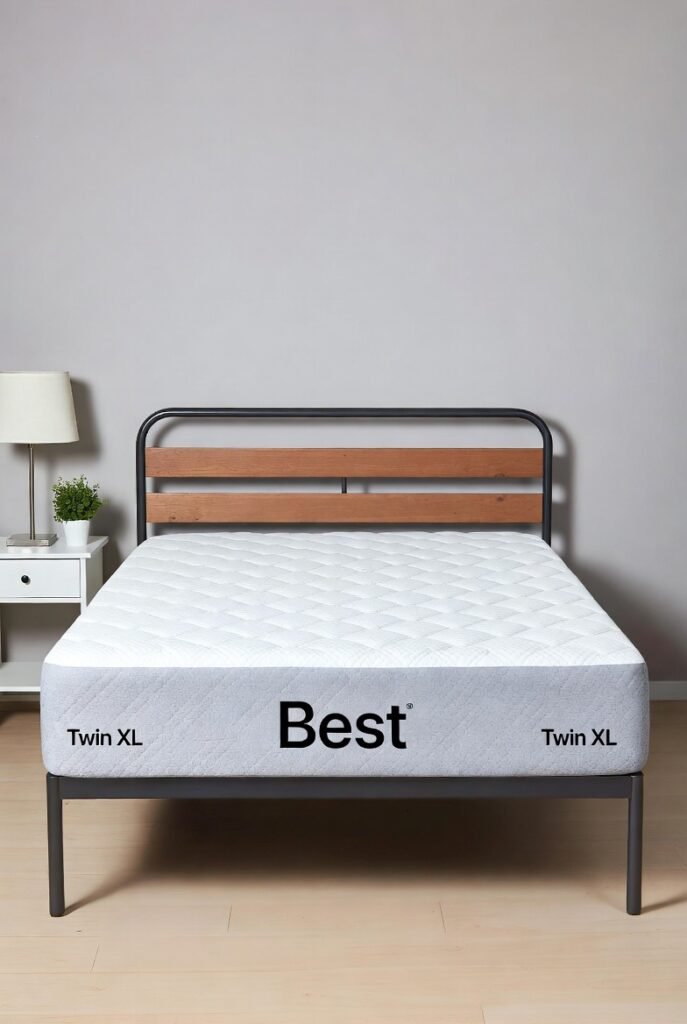
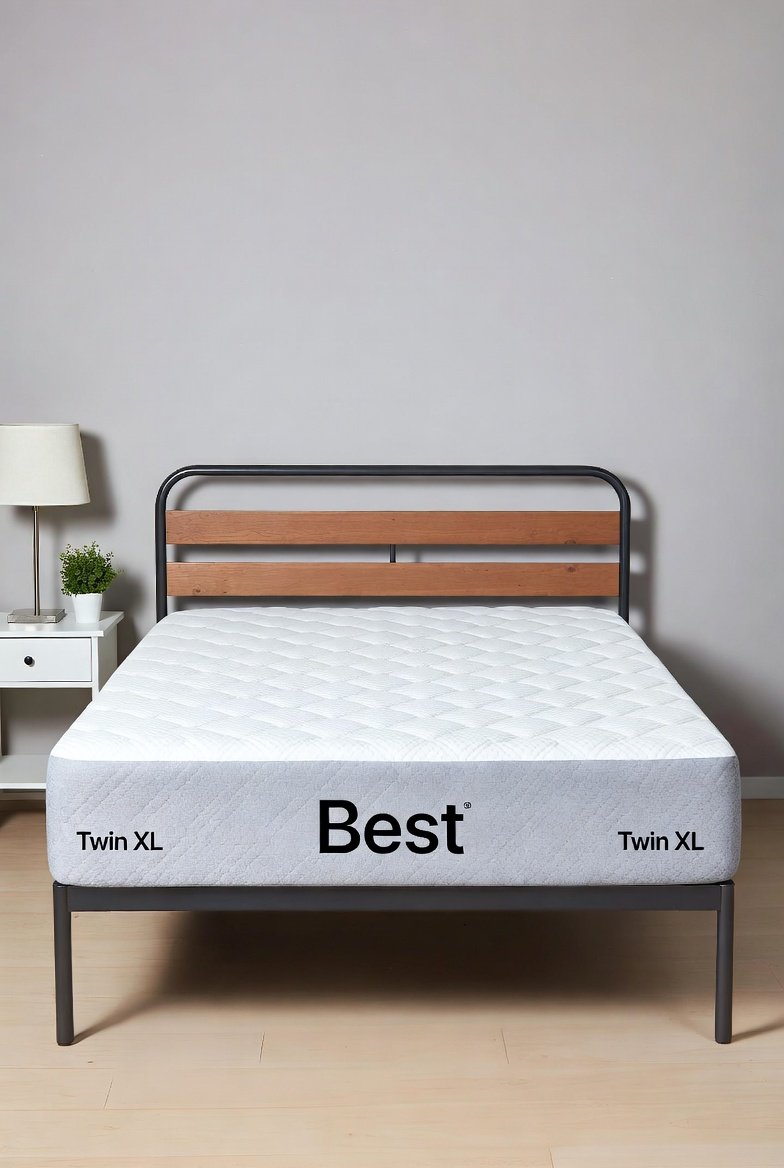
Best Twin XL Mattress — Why the Length Illusion Causes Most Buyer Regret
Most buyers believe a simple equation:
More length = more comfort.
That belief is responsible for a surprising amount of mattress regret.
Because while Twin XL adds five critical inches, those inches only matter when the mattress is structurally capable of supporting them.
Otherwise, the benefit becomes theoretical.
This is what sleep engineers sometimes call a geometry correction — fixing a body-to-surface mismatch. But when the mattress behaves like a stretched twin instead of a length-stable sleep system, the correction quietly collapses.
Feet stop hanging off…
…but alignment drifts.
Pressure shifts downward…
…but support weakens near the foot.
Nothing fails dramatically.
Sleep just becomes subtly less restorative.
This pattern is so common it deserves a name.
The Length Illusion (Start Here Before You Compare Anything)
The Length Illusion occurs when buyers assume added inches guarantee better sleep — even when the mattress cannot maintain structural consistency across that length.
Twin XL succeeds when geometry and structure agree.
It disappoints when they don’t.
You are likely making the right decision if:
✔ Your feet press the edge of a standard twin
✔ Room width cannot expand
✔ You sleep fully extended
✔ The mattress must fit a dorm frame
✔ You need length without spatial sprawl
You are crossing into risk territory if:
- You actually need width
- Two people will share the surface
- You expect queen-level freedom
- You want a “roomy” feel
Twin XL is not a small luxury bed.
It is a precision constraint solver.
Used correctly, it feels invisible.
Used incorrectly, it feels narrow every night.
Twin XL Is a Geometry Correction — Not an Upgrade
Many shoppers frame Twin XL as a step upward.
It isn’t.
It is a targeted correction for vertical misalignment between body and mattress.
Where a standard twin compresses tall sleepers into subtle curvature — bent knees, pointed toes, diagonal sleeping — Twin XL restores full size extension.
That restoration matters more than most people realize.
When the body can lengthen naturally:
- muscles release more completely
- spinal neutrality improves
- micro-adjustments decrease
- sleep depth often improves
But this only happens when support remains stable from head to foot.
Length without integrity is merely unused fabric.
Which Constraint Are You Actually Solving? (30-Second Diagnosis)
Before evaluating firmness or materials, identify the real constraint.
✔ Choose Twin XL when:
- your feet hang off a twin
- dorm standards require it
- width is physically impossible
- adjustable split-king setups demand it
❌ Do NOT choose Twin XL when:
- shoulder crowding already bothers you
- you change positions dramatically
- territorial sleep matters
- you expect lateral freedom
Many returns happen because buyers solved the wrong constraint.
Width problems cannot be fixed with length.
Dorm Reality — Where Most Twin XL Mattresses Are Tested
Dorm rooms are not neutral environments.
They introduce mechanical stress patterns most residential bedrooms never produce.
Common dorm conditions include:
- metal institutional frames
- thin, flexible slats
- elevated risers
- vibration traveling through shared floors
- frequent edge sitting
- limited repositioning space
Notice something important:
None of these involve heavy weight.
Dorm mattresses rarely fail from overload.
They fail from habit stress.
Repeated edge sitting softens the perimeter.
Frame flex amplifies motion.
Risers increase leverage at pressure points.
By Month 3–6, many mattresses feel subtly different — not broken, just less composed.
This is where regret typically begins.
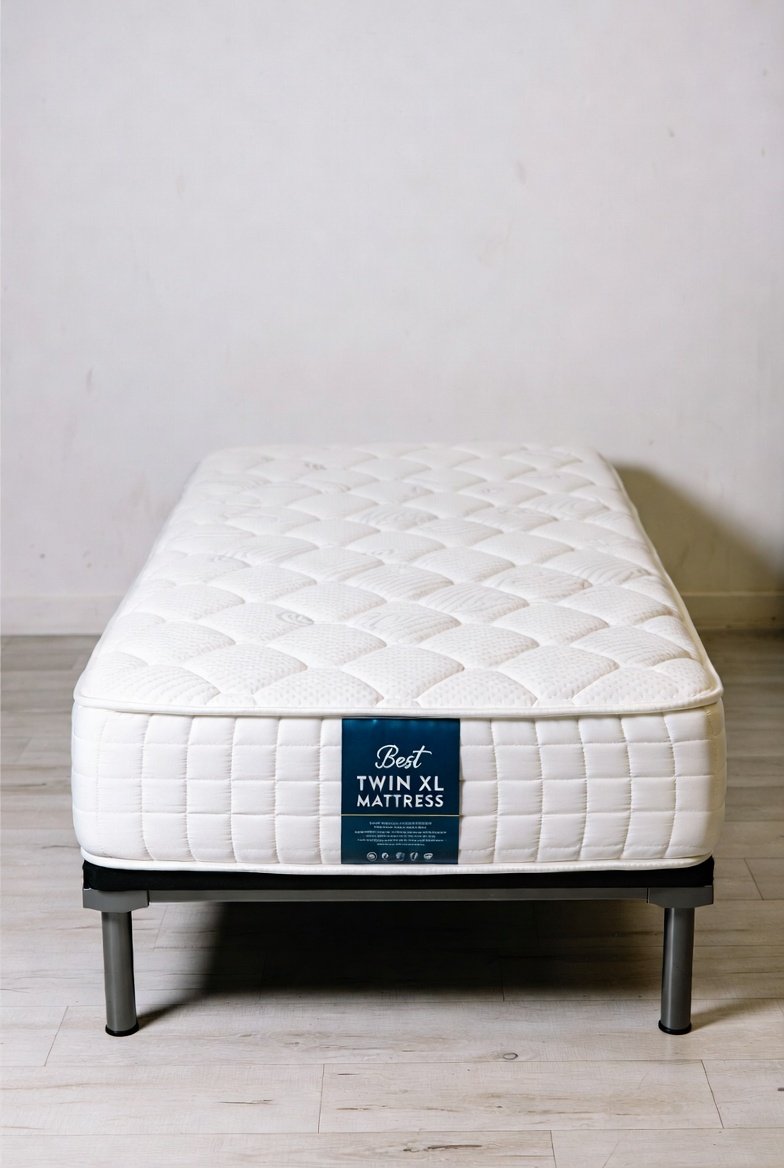
Environmental Stability Matters More Than Luxury
Dorm buyers often focus on comfort layers.
Experienced buyers focus on composure.
A trustworthy Twin XL should feel:
- stable on imperfect frames
- predictable during movement
- resistant to perimeter fatigue
Luxury feel fades quickly when structural calm disappears.
Stability is the real dorm upgrade.
Edge Compression — The Narrow Bed Multiplier
On wider mattresses, sleepers can drift inward.
On Twin XL, edges are unavoidable territory.
When perimeter strength declines:
usable width shrinks
sleepers re-center repeatedly
micro-wakeups increase
Sleep fragmentation often follows — quietly enough that most people blame stress or campus noise.
Strong edges preserve something invaluable:
sleep territory.
Ignore them, and the mattress gradually narrows.
Adjustable Bases Introduce a Different Kind of Physics
Twin XL is widely used in split-king adjustable systems.
But narrow mattresses experience bending forces differently than wider ones.
This brings us to a critical concept.
Hinge Fatigue — Why Some Mattresses Age Faster on Adjustable Bases
Hinge fatigue occurs when repeated elevation concentrates stress along bend zones, weakening materials unevenly over time.
Early signs include:
- subtle bunching
- delayed foam recovery
- faint ridge formation
- alignment drift during elevation
- size explain guide
A mattress that feels excellent when flat can feel entirely different when raised.
Compatibility is not optional here.
It is structural.
What Smooth Flex Actually Feels Like
A well-matched Twin XL should:
- bend without resistance
- return to flat without delay
- maintain even tension
- avoid forming pressure ridges
When elevation feels natural rather than mechanical, the mattress is cooperating with the base — not fighting it.
That cooperation extends lifespan dramatically.
Firmness — Why Medium Quietly Solves More Problems
Twin XL compresses sleep into a narrower channel.
Extremes tend to magnify.
Too soft → hammock curvature across length
Too firm → pressure buildup with limited adjustment space
Medium to medium-firm typically preserves alignment without introducing rigidity.
For most dorm residents and adjustable users, it is the lowest-risk starting point.
Not exciting.
But remarkably dependable.
Material Behavior Matters More Than Marketing
Instead of chasing labels, evaluate behavioral traits:
Look for materials that:
- recover quickly after bending
- distribute weight evenly
- resist forming soft zones
Avoid surfaces that feel dramatic in the first minute but unstable after an hour.
Predictability always outperforms spectacle.
Twin XL vs Full — Solve Geometry Before Comfort
This confusion drives thousands of unnecessary returns.
Choose Twin XL when legroom is the dominant constraint.
Choose Full when width defines comfort.
Trying to solve lateral compression with added length simply relocates discomfort.
Geometry clarity prevents expensive experimentation.
Durability — Measure Fit Years, Not Ownership Years
Narrow mattresses concentrate load repeatedly in the same corridor.
To extend performance:
- rotate if permitted
- vary elevation angles
- avoid sitting on one perimeter zone nightly
- support the mattress fully
Think in terms of fit lifespan — the years during which the mattress matches your constraint.
Not decades.
Precision tools rarely aim for permanence.
They aim for reliability during the problem they were built to solve.
The Twin XL Stop Signal
You likely chose correctly when:
✔ your feet rest fully without awareness
✔ the mattress bends smoothly
✔ edges remain composed
✔ the room still functions comfortably
At that point, further comparison rarely improves sleep.
It usually introduces doubt.
Constraint solved means decision complete.
Confident buyers recognize resolution — and stop searching.
Failure Signals You Should Never Ignore
Replace sooner if you notice:
- forming hinge ridges
- rapid perimeter softening
- downward alignment drift
- increasing motion sensitivity
Twin XL rarely fails loudly.
But quiet instability is still instability.
Early action protects sleep quality.
Bottom Line — Precision Beats Expansion
The best Twin XL mattress does not attempt to feel oversized.
It solves a geometry problem cleanly — restoring length without introducing new constraints.
For dorm residents and adjustable-base users, success looks like:
- even head-to-foot support
- edges that preserve territory
- smooth elevation behavior
- stability on imperfect frames
Chosen intentionally, Twin XL becomes what it was always meant to be:
A precise correction that disappears beneath you — leaving only uninterrupted sleep.