
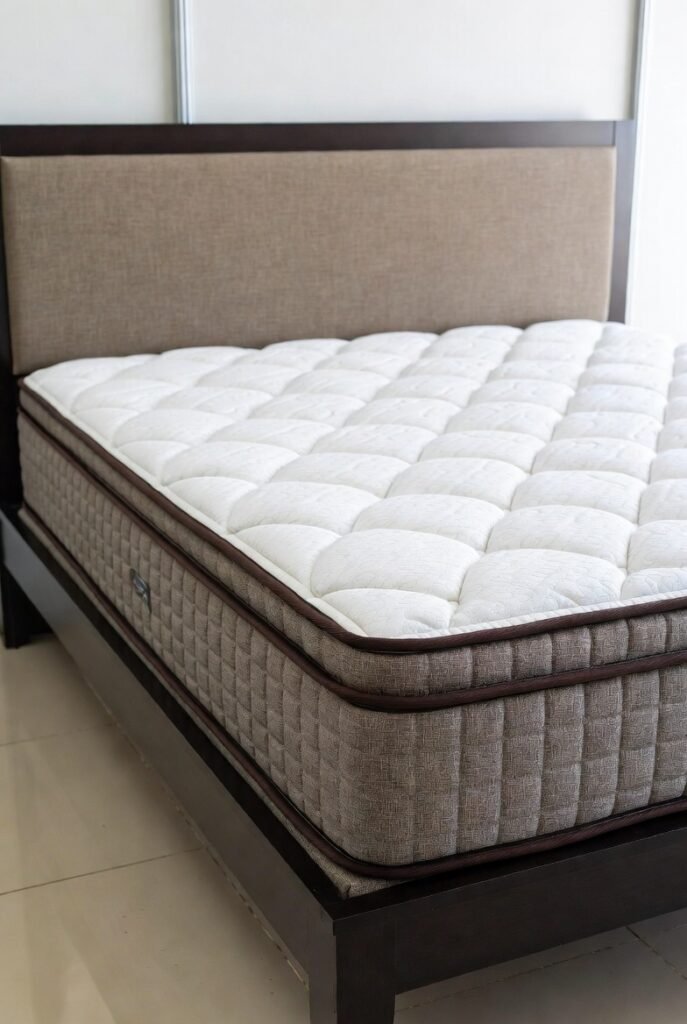
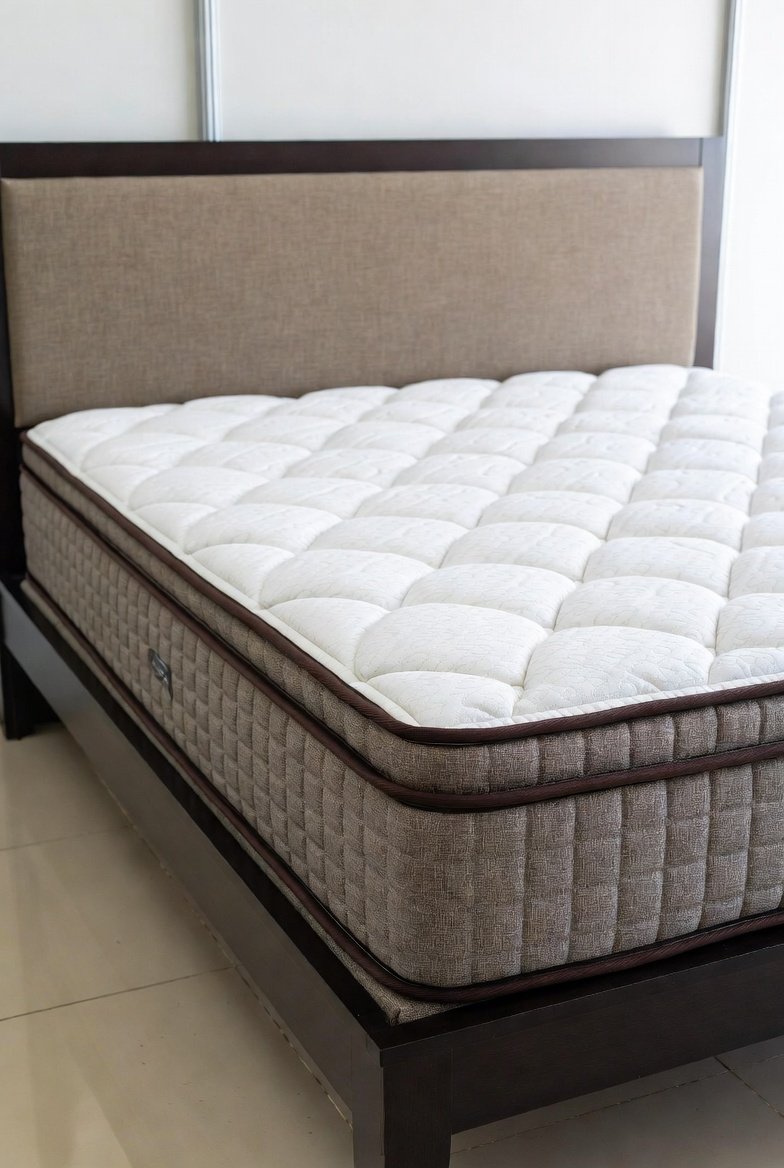
Best Mattress Under $800
$800 is where mattress marketing gets dangerous.
Not because beds suddenly become bad — but because this is the price range where products start sounding premium without actually being premium.
Materials improve. Construction stabilizes. Comfort expands.
Yet buyers who assume “more expensive automatically means great” often make the same mistakes they would at $500 — just at a higher cost.
This budget introduces margin.
And margin only helps disciplined buyers.
Used wisely, it delivers a affordable mattress that can remain supportive for years. Used poorly, it disappears into unnecessary softness, decorative thickness, and features that feel impressive but age quickly.
This guide exists to show exactly how to make that margin work for you.
No hype.
No fake luxury framing.
No brand pushing.
Just structural clarity about what truly improves — and where the ceiling still exists.
Quick Decision Framework: Is $800 Your Smart Stopping Point?
Before diving deeper, answer one critical question:
Is $800 where you should stop — or where you should keep climbing?
Stop at $800 if:
- You want strong durability without premium pricing
- You fall within an average weight range
- You replace mattresses roughly every 6–8 years
- You prefer balanced comfort over plush indulgence
Move beyond $1,000 if:
- You want true ergonomic zoning
- You need strong edge support
- You weigh 230+ lbs
- You expect decade-long performance
- You prefer latex or advanced hybrids
This fork alone prevents one of the most common buyer errors:
overspending for features you don’t actually need.
What $800 Actually Buys — Material Upgrade Map
The jump from $500 is not cosmetic.
It is structural.
Component | Under $500 | Under $800 |
Base foam | 1.6–1.8 PCF | 1.8–2.5 PCF |
Memory foam | 2–3 PCF | 3–4 PCF |
Coil count (Queen) | 400–600 | 700–900 |
Expected lifespan | 4–6 years | 6–8 years |
Motion control | Moderate | Noticeably improved |
These upgrades don’t create luxury.
But they dramatically reduce early failure risk.
And that is what truly improves sleep quality over time.
What Improves When You Move Beyond $500
The most meaningful gain is structural forgiveness.
You now have more room to make small mistakes without shortening the mattress’s life.
Typical improvements include:
- higher-density foams that resist sag
- thicker comfort layers that don’t rely on ultra-soft materials
- more consistent support across the surface
- better motion isolation for couples
However — and this is crucial — some things still do NOT reliably improve:
❌ edge reinforcement
❌ advanced zoning
❌ natural materials
❌ long-term plushness
$800 buying guide
Not luxury.
Where Manufacturers Quietly Spend the Extra $300
This is rarely explained — but it is one of the clearest signals of mattress quality.
The additional budget typically funds:
Denser Transition Layers
These sit between comfort foam and base support, preventing the “bottoming out” sensation common in cheaper beds.
Stronger Coil Architecture
Better gauge steel and improved coil geometry increase resistance to body impressions.
Improved Lamination
Higher-quality adhesive processes reduce layer shifting — a subtle but important durability factor.
More Breathable Covers
Often overlooked, but airflow begins at the surface.
None of these features photograph well.
But all of them influence how a mattress ages.
The $600–$700 Zone — Where Value Often Peaks
Interestingly, some of the strongest performers sit slightly below the ceiling.
Manufacturers in this bracket tend to emphasize structure over features.
These beds often:
- use firmer base foams
- avoid unnecessary height
- balance pressure relief carefully
- minimize gimmicks
- best value mattress
The result?
Mattresses that age quietly — instead of dramatically.
Spending the full $800 is not mandatory.
Spending wisely is.
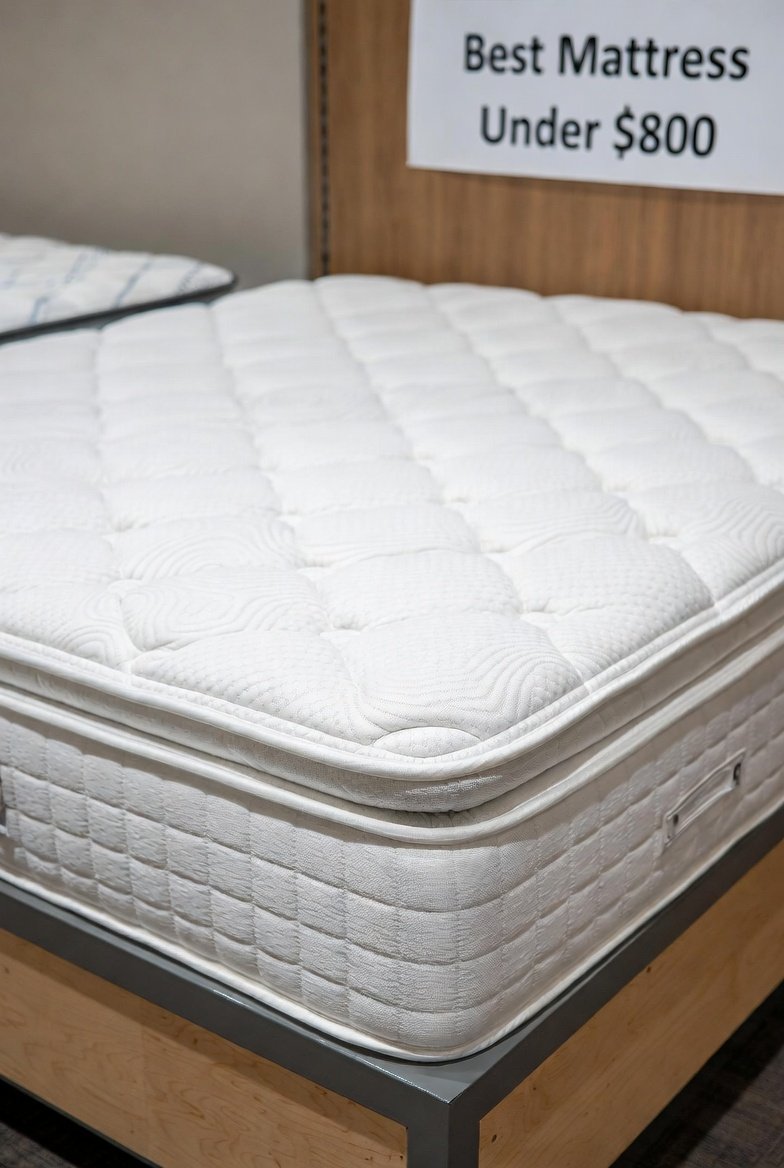
Thickness Finally Becomes Functional
Below $500, thickness is often theater.
Under $800, it can begin supporting real structure — if materials justify it.
A disciplined 10–12 inch build frequently represents the sweet spot.
Thicker designs still demand skepticism.
More inches only help when the internal architecture can sustain them.
Otherwise, height becomes camouflage.
Firmness Expands — But Risk Doesn’t Disappear
One advantage of this tier is optional softness.
Side sleepers gain access to deeper pressure relief.
But softness still carries a mechanical cost.
General guidance:
- Back sleepers → medium-firm
- Side sleepers → medium
- Stomach sleepers → firm
The safest long-term strategy remains unchanged:
choose alignment first.
Comfort adapts.
Spines remember.
Cooling: Incremental — Not Transformational
Cooling improves modestly through:
- better airflow in hybrids
- more breathable foams
- upgraded fabric covers
But this is still passive regulation.
If you sleep warm, airflow matters far more than marketing labels.
$800 vs $1,000 — The Upgrade Many Buyers Overestimate
The psychological gap between these numbers feels large.
The structural gap is smaller — but meaningful.
Above $1,000 you typically begin to see:
- true zoned ergonomics
- latex integration
- stronger edges
- thicker high-density comfort layers
- longer lifespans
Knowing this boundary prevents “price drift,” where buyers keep upgrading without understanding why.
If those features matter, step up confidently.
If they don’t — $800 remains a remarkably rational stopping point.
Longevity — The Honest Timeline
For average sleepers:
Years 1–2: Stable support
Year 4: Early softening appears
Years 6–7: Structural fatigue becomes noticeable
Heavier sleepers compress materials faster.
Couples accelerate wear.
The extra budget buys time — not immunity.
Where Buyers Still Go Wrong
Even here, mistakes repeat:
- paying for height instead of density
- chasing plushness
- assuming price guarantees durability
- ignoring body weight
$800 forgives more errors than $500.
But it still punishes poor assumptions.
Who This Price Tier Is Perfect For
Ideal if you:
✅ want durability without luxury pricing
✅ sleep with a partner
✅ prefer balanced comfort
✅ expect 6–8 years of use
Less ideal if you:
❌ demand hotel-level plushness
❌ want decade performance
❌ require medical-grade support
The Real Advantage of the $800 Range
It isn’t comfort.
It’s decision safety.
You now operate in a range where thoughtful choices almost always produce good outcomes.
Buyers who stay disciplined here often sleep just as well as those who spend far more.
Not because the mattress is identical…
…but because the fundamentals are finally strong.
Bottom Line
The best mattress under $800 isn’t the one with the loudest feature list.
It’s the one that balances support, durability, and restraint without pretending to be luxury.
This price range doesn’t reward excitement.
It rewards judgment.
Choose structure over softness.
Choose transparency over marketing.
Choose durability over first impressions.
Do that — and $800 becomes one of the smartest investments in the entire mattress market.