
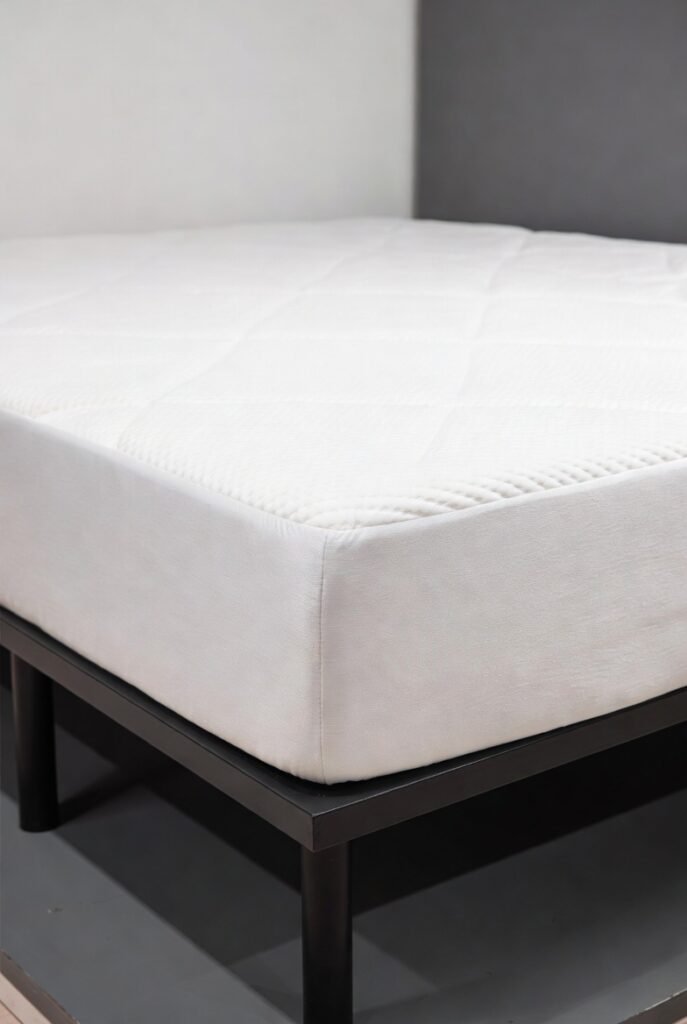
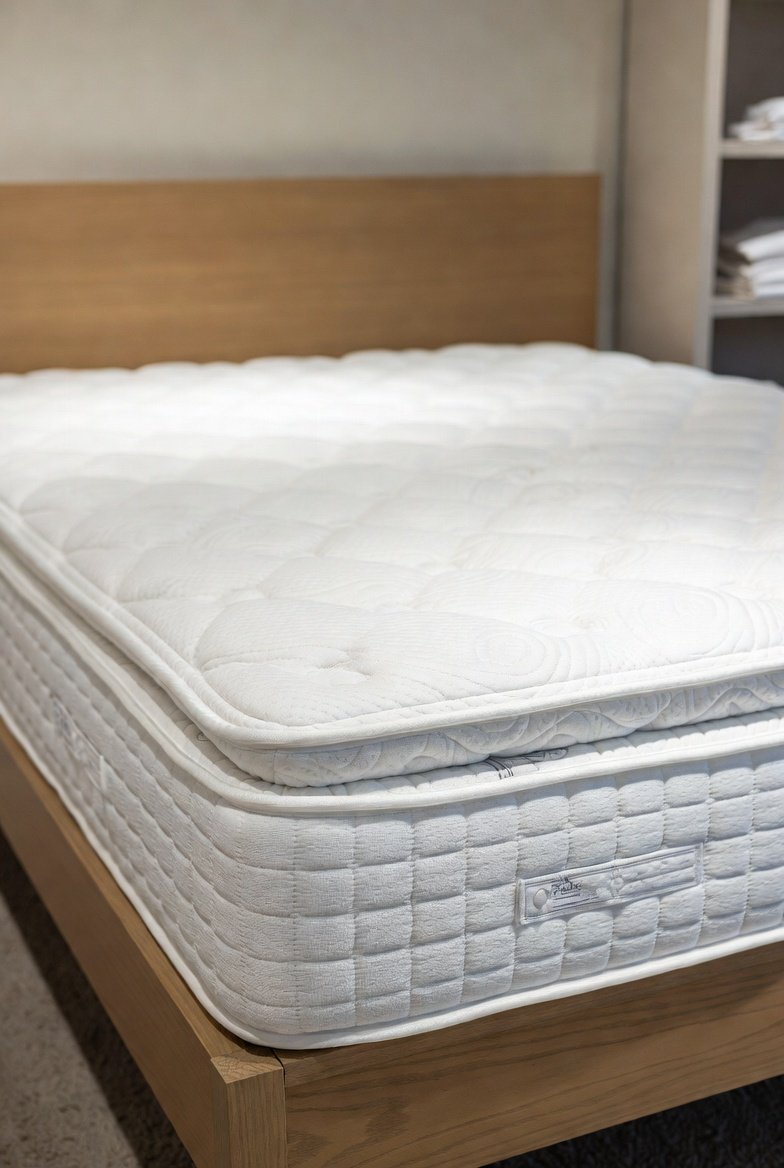
Best Full Size Mattress — Why Smart Buyers Optimize Space Before They Upgrade Size
Most mattress mistakes don’t happen because people buy too small.
They happen because people buy too large for the room they actually live in.
The modern mattress market subtly encourages escalation — twin becomes full, full becomes queen, queen becomes king — as if sleep quality improves automatically with each expansion.
But experienced buyers eventually learn a quieter truth:
A mattress should fit the room before it fits your aspirations.
When it doesn’t, daily friction replaces nightly comfort.
Walkways narrow.
Furniture crowds.
Visual openness disappears.
Bedrooms begin functioning like storage units rather than recovery spaces.
The full size mattress exists to prevent that outcome.
Not as a compromise.
As an optimization.
This size guide will help you determine whether full is the highest-intelligence choice for your space — and just as importantly, when it is not.
The Space Efficiency Rule (Start Here)
Before comparing materials, brands, or features, apply this simple spatial principle:
When the room is the primary constraint — not the sleeper — full is often the superior decision.
You are likely a strong candidate for a full size mattress if:
✔ Preserving walkability matters
✔ Your bedroom doubles as a workspace or living zone
✔ Visual openness improves your sense of calm
✔ You value layout flexibility
✔ You prefer a room that functions rather than one that merely fits a bed
If these resonate, sizing up may reduce your quality of living even if the mattress itself feels luxurious.
Because sleep happens at night.
Space affects you all day.
Why the Full Size Exists at All
The full mattress occupies a strategically balanced position in sleep design.
Larger than a twin, yet far less spatially dominant than a queen, it was historically created to support single sleepers who needed room to move without surrendering the entire bedroom footprint.
That mission still holds.
Full size protects something buyers rarely evaluate consciously:
room equilibrium.
When a mattress consumes too much visual and physical territory, the nervous system registers subtle environmental pressure — cluttered pathways, constrained movement, compressed layout logic.
Over time, this friction becomes background stress.
A properly scaled mattress prevents it.
The Upgrade Trap — When Bigger Quietly Becomes Worse
Many buyers leap from full directly to queen mattress under the assumption that more space must equal better sleep.
Sometimes that is true.
Often it is not.
Here is the trap:
A queen improves sleep slightly…
while degrading room usability significantly.
The result?
A bedroom that feels tighter every single day.
What begins as excitement gradually turns into spatial negotiation — stepping sideways around corners, repositioning furniture, sacrificing reading chairs or storage.
None of this ruins sleep.
But it erodes environmental ease.
The smartest buyers recognize that comfort is not purely vertical (on the mattress).
It is horizontal — embedded in how a room breathes.
The Room Function Test
Before upgrading size, ask one decisive question:
Will my room still function effortlessly once the mattress is installed?
A bedroom should allow:
- natural walking paths
- accessible nightstands
- door clearance
- visual balance
- furniture proportionality
If adding a larger mattress forces constant micro-adjustments to daily movement, the upgrade has already begun taxing your lifestyle.
The goal is not to fit the biggest bed possible.
The goal is to preserve spatial harmony.
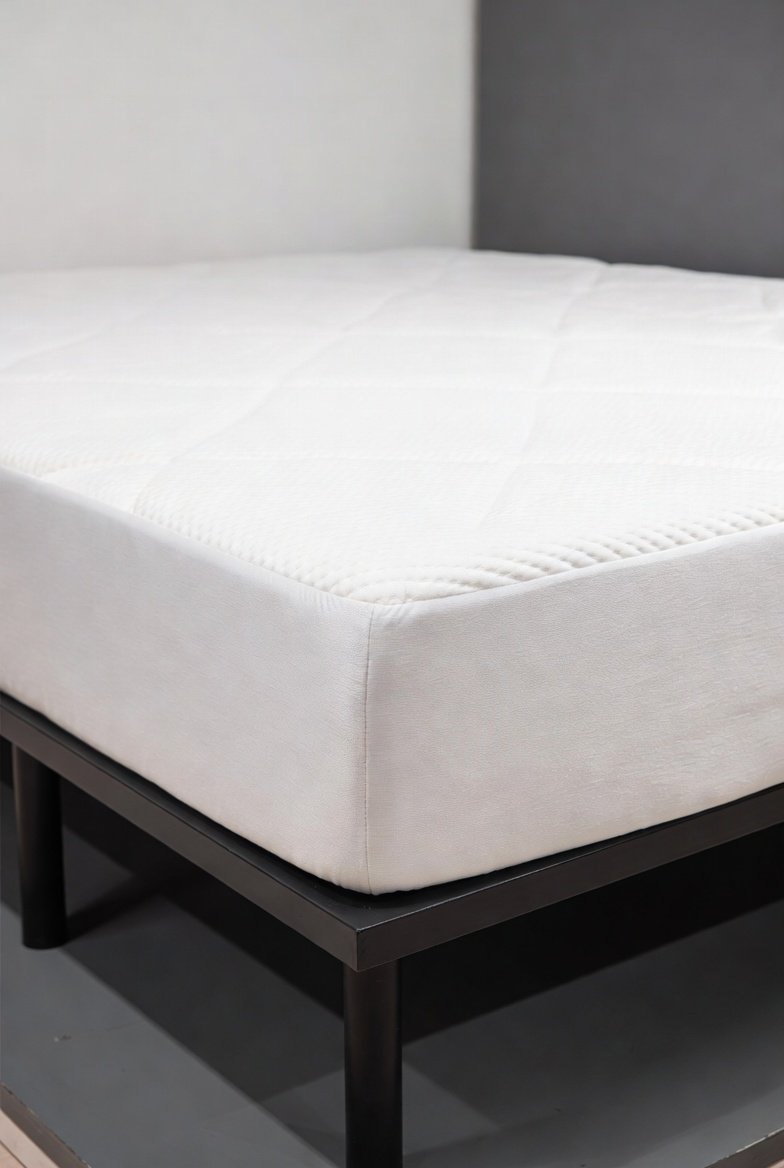
Spatial Calm — The Psychological Advantage Few Discuss
Humans respond deeply to environmental geometry.
Open rooms signal safety.
Navigable spaces reduce cognitive load.
Balanced layouts promote relaxation.
When a mattress overwhelms a room, the brain quietly shifts into constraint awareness.
You may not articulate it — but you feel it.
A well-scaled full mattress often creates something buyers don’t anticipate:
psychological exhale.
The room feels usable again.
And usable rooms tend to support better sleep than crowded ones.
The False Economy Curve
Some buyers skip full because they fear “outgrowing it.”
Others jump straight to queen believing they are future-proofing.
But oversizing carries hidden costs:
- larger bedding
- heavier frames
- reduced layout options
- harder moves
- fewer placement choices
When a full already satisfies your spatial and sleep needs, upgrading early becomes a form of silent inefficiency.
Smart spending is not about buying bigger.
It is about buying precisely once.
Independence Boundaries — Where Full Stops Working
Authority requires drawing lines clearly.
A full mattress excels for solo sleepers.
It begins to strain when sleep territory must be shared consistently.
You are approaching the independence boundary if:
- partner movement wakes you
- shoulder overlap occurs
- diagonal sleeping becomes necessary
- personal space feels negotiated
- long term use mattress
At that point, the problem is no longer spatial efficiency.
It is territorial separation.
And that is where queen legitimately enters the conversation.
Choosing correctly means identifying which constraint dominates your sleep.
Movement Freedom Without Spatial Dominance
One of the most underestimated advantages of a full mattress is controlled freedom.
It allows repositioning without letting the bed become the architectural centerpiece of the room.
This balance matters more in:
- apartments
- studios
- urban housing
- multi-use bedrooms
- mattress use for apartments
In these environments, oversized furniture quietly taxes functionality.
A full respects both sleep and structure.
Firmness Through an Efficiency Lens
Firmness should support composure rather than excess.
Because full mattresses are commonly used by single sleepers, alignment tends to remain stable across the surface — reducing the need for extreme firmness profiles.
General orientation:
- Medium to medium-firm often preserves posture best.
- Excessively plush surfaces may reduce mobility.
- Overly rigid builds can create unnecessary pressure concentration.
Think balance, not drama.
Efficiency favors moderation.
Thermal Behavior — Why Full Often Sleeps Predictably
With fewer bodies sharing the surface, heat concentration typically declines.
Cooling rarely needs theatrical technology.
Instead, look for material neutrality — surfaces that regulate rather than trap warmth.
Consistency beats spectacle.
Always.
Longevity Expectations — Load Discipline Matters
Durability is influenced less by size than by load concentration.
Single-sleeper usage often produces surprisingly even wear patterns.
To preserve structural integrity:
- rotate as recommended
- support the mattress fully
- avoid habitual edge sleeping
When treated well, a high-quality full mattress can deliver impressive lifespan efficiency — another quiet economic advantage.
Apartment Intelligence — Why Urban Buyers Gravitate Toward Full
Urban living rewards flexibility.
Layouts shift.
Furniture moves.
Leases change.
A mattress that adapts gracefully becomes an asset rather than an obstacle.
Full size excels here because it balances:
sleep freedom
mobility
layout versatility
It is not the smallest choice.
It is the most agile.
When Full Is Actually the Smarter Luxury
Luxury is often mistaken for scale.
But true luxury is frictionless living.
If a full mattress allows:
- a reading chair to remain
- natural light to travel
- movement to feel effortless
- the room to stay breathable
then the decision reflects spatial intelligence — not compromise.
The smartest rooms rarely feel overfilled.
Failure Modes — How Full Reveals the Wrong Decision
Every mattress size signals mismatch differently.
Full usually fails through territory pressure.
Watch for:
- craving diagonal space
- increased sensitivity to movement
- persistent shoulder proximity
These signals mean the sleeper constraint has overtaken the room constraint.
When that happens, resizing is rational.
Until then, efficiency wins.
The Full Stop Signal
You likely chose correctly when:
✔ your room flows naturally
✔ the bed never feels intrusive
✔ movement remains comfortable
✔ sleep occurs without spatial awareness
Once those conditions exist, further upgrading rarely improves life — it simply expands the footprint.
Confident buyers recognize sufficiency.
And stop there.
Bottom Line — Precision Outperforms Escalation
The best full size mattress is not defined by price, thickness, or prestige.
It is defined by proportional living.
When the mattress fits the room — and the room still supports your life — sleep becomes only one of many things that improve.
Choose full when efficiency is the real objective.
Respect territorial boundaries when they emerge.
And remember:
Bigger is easy.
Well-scaled is intelligent.