
Best King Mattress — The Upgrade That Changes Sleep Territory (And When It Actually Pays Off)
Most mattress upgrades are driven by a simple belief:
More space must mean better sleep.
Sometimes it does.
Sometimes it simply makes the same problems larger — and more expensive.
A king mattress is not just a bigger version of what you already own. It reshapes how sleep territory is negotiated, how movement is absorbed, and how long structural integrity remains invisible before wear emerges.
That is why experienced buyers don’t ask:
“Is king better?”
They ask:
“When does king start paying for itself?”
Because once you understand that threshold, the decision becomes surprisingly clear.
The Upgrade Illusion Most Buyers Walk Into
Couples mattress often upgrade after a period of sleep friction.
Maybe one partner moves frequently.
Maybe blanket tug-of-war has become routine.
Maybe the bed suddenly feels smaller than it used to.
So they assume width is the cure.
Here is the reality:
A king mattress solves space problems — not structural ones.
If the underlying build lacks support discipline, motion control, or edge resilience, the upgrade simply delays when you notice.
This is why some buyers describe their king as “amazing for a year… then gradually less so.”
The mattress didn’t suddenly fail.
The additional surface just postponed the moment flaws became detectable.
Understanding this protects you from one of the most expensive mistakes in sleep buying — assuming size equals quality.
Sleep Territory — The Real Advantage of King Size
The defining feature of a king mattress is not comfort.
It is territory stability.
Each sleeper gains a clearly defensible zone — space that does not need constant renegotiation overnight.
That matters more than most people realize.
When territory is stable:
- micro-awakenings decline
- subconscious adjustments decrease
- muscles remain more relaxed
- sleep cycles lengthen
Over time, this produces something subtle but powerful:
calmer sleep architecture.
Not dramatic.
Not instantly noticeable.
But measurably restorative.
For couples whose sleep styles conflict, king size often feels less like an upgrade — and more like a reset.
The King Upgrade Decision Rule (Use This First)
Before comparing brands, materials, or features, classify yourself.
You are likely a true king candidate if at least two of these are consistently present:
✔ One or both sleepers change position frequently
✔ You wake each other unintentionally
✔ Personal space feels negotiated rather than assumed
✔ Pets or children occasionally join
✔ Morning stiffness correlates with overnight disturbance
If fewer than two apply, queen mattress often remains economically smarter.
This rule alone prevents thousands of unnecessary upgrades every year.
Because the goal is not maximum size.
The goal is minimum sleep friction.
Upgrade Economics — Where the Investment Starts Making Sense
A king mattress typically costs more upfront — but the smarter lens is cost per year of improved sleep.
Consider two scenarios:
Replace a queen mattress after repeated disturbances.
Or upgrade once and stabilize sleep long-term.
When the upgrade removes nightly interruptions, the return compounds quickly in energy, mood, and recovery.
But here is the boundary many buyers miss:
Past a certain quality threshold, spending more rarely improves sleep proportionally.
You are not buying prestige.
You are buying stability.
Once structural competence is confirmed, chasing incremental luxury often produces diminishing returns.
Understanding this keeps the purchase rational rather than emotional.
Distance vs Engineering — Why Both Still Matter
It is true that wider surfaces reduce motion isolation.
But distance is only a buffer.
Engineering is the solution.
Poorly built king mattresses still transmit movement — just more subtly. Over time, that subtlety accumulates into fragmented rest.
Look for designs that absorb energy locally rather than allowing it to travel.
When both distance and construction cooperate, sleep independence becomes remarkably consistent.
The Expensive Mistake Curve
King mattresses rarely fail dramatically.
They drift.
Edges soften gradually.
Support zones lose symmetry.
Alignment shifts millimeter by millimeter.
Because the surface is wide, these changes can remain invisible longer — until one day the bed simply feels “less composed.”
And by then, replacement is costly.
This is why structural integrity matters even more at king scale.
The mistake is not buying king.
The mistake is assuming the upgrade protects you from physics.
Edge Stability — Where Territory Is Quietly Won or Lost
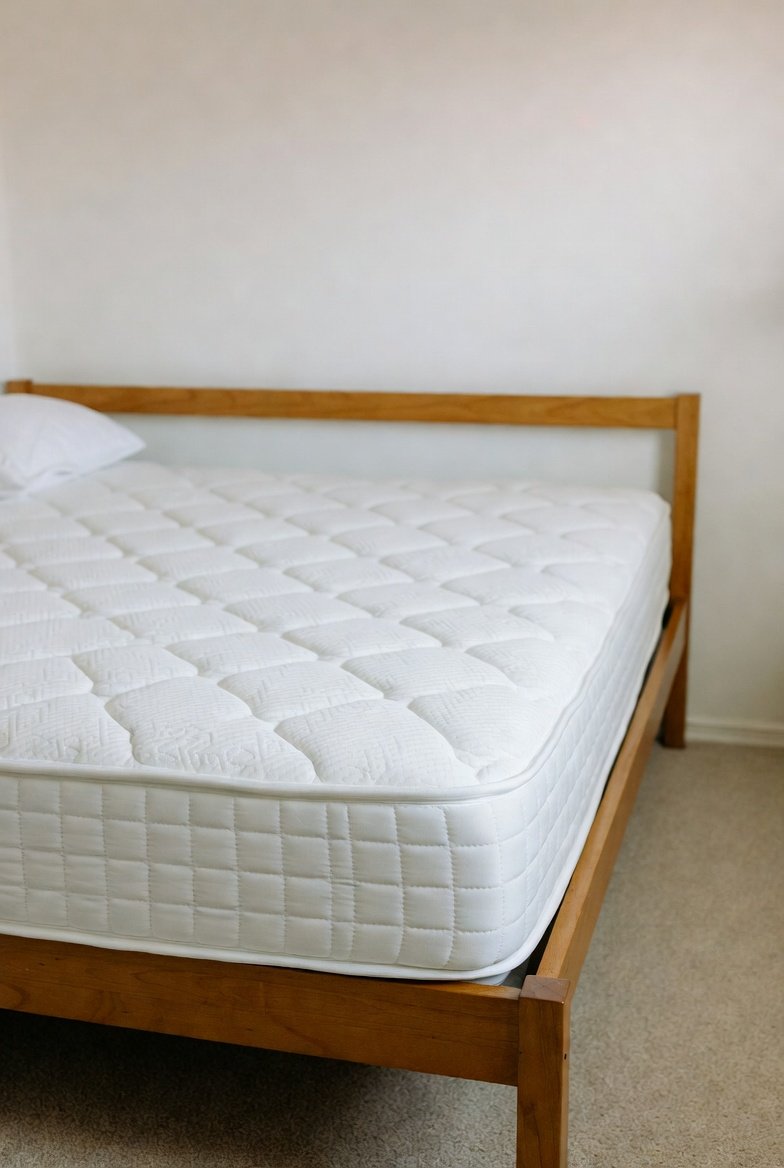
On a wide mattress, edges define the usable map.
When perimeter support weakens:
sleepers migrate inward
territory compresses
wear concentrates
lifespan shortens
Once edge fatigue begins, it rarely reverses.
Treat edges as longevity infrastructure — not a convenience feature.
A trustworthy king should feel dependable from center to boundary, preserving the full geometry you paid for.
Independence Architecture — How King Reduces Sleep Negotiation
Couples often underestimate how much nighttime negotiation occurs.
Every repositioning is a tiny conversation between bodies.
King size reduces the need for those conversations.
But the most stable designs go further by creating what sleep specialists sometimes call independence architecture — surfaces where movement settles locally rather than propagating.
The result is not silence.
It is non-interference.
And non-interference is one of the most reliable predictors of long-term satisfaction.
Firmness Behavior Changes in Wider Beds
Firmness does not feel identical once space expands.
Softer builds often feel luxurious initially because territory prevents compression overlap.
Yet they can degrade quietly — improving fast, aging faster.
Moderate firmness typically preserves geometry more effectively across a wide span.
Think of firmness here less as comfort preference and more as structural calibration.
You are tuning resistance so the mattress keeps its composure year after year.
Thermal Reality — Why Kings Often Sleep More Neutral
Contrary to marketing drama, cooling rarely needs to be aggressive in a king.
Separation already reduces heat concentration.
What matters is simple thermal neutrality:
- airflow through the core
- breathable upper layers
- surfaces that release rather than trap warmth
Avoid chasing extreme cooling claims.
Consistency beats theatrics.
Longevity Curve — How King Mattresses Actually Age
All mattresses soften. Predictable ones soften evenly.
The early warning signs are subtle:
- territory shrinking toward the center
- slight asymmetry across the width
- slower rebound
Well-designed kings maintain proportional resistance for years, allowing sleepers to occupy the surface freely rather than adapting around weaknesses.
Longevity is less about brand and more about architectural discipline.
When King Is Actually the Wrong Upgrade
Authority means acknowledging limits.
King is not automatically smarter if:
- your bedroom forces tight clearance
- rotating the mattress becomes impractical
- you sleep comfortably without disturbance
- maneuverability matters (stairs, relocations)
Sometimes spatial harmony beats spatial expansion.
Recognizing this prevents buying complexity disguised as comfort.
Budget Reality — Where Savings Stop Working
Lower-priced king mattresses can function — but structural margins narrow quickly.
Larger surfaces demand more material integrity. When density drops, fatigue accelerates.
If durability is the priority, modestly increasing budget often extends lifespan significantly.
In sleep economics, longevity usually beats short-term savings.
Buyer Mistakes That King Quietly Exposes
Patterns repeat:
Assuming width fixes everything.
Ignoring perimeter strength.
Choosing plushness over composure.
Overspending past the performance threshold.
The smartest buyers treat king not as indulgence — but as infrastructure.
The King Stop Signal
Once a mattress demonstrates:
✔ stable edges
✔ localized motion absorption
✔ consistent support
✔ territory preservation
You have crossed the upgrade threshold.
Beyond that point, comparison rarely improves outcomes.
It typically introduces noise.
Confident buyers recognize structural sufficiency — and stop searching.
Bottom Line — When King Truly Becomes Worth It
The best king mattress does more than expand the bed.
It stabilizes sleep territory, reduces negotiation, and preserves alignment across a wider field.
Choose it when independence is the problem you are solving — not simply because larger feels safer.
Confirm structural competence.
Respect spatial realities.
Stop upgrading once performance is secured.
Do that, and king size becomes less a luxury…
…and more a long-term sleep strategy.